
How to Get Featured in Top Design Publications: The PR Roadmap for Interior Designers
Every interior designer dreams of seeing their work in the pages of Veranda, House Beautiful, or Architectural Digest. But the path to getting featured isn't always clear, and the misconceptions about what it takes can keep talented designers from even trying.
At The Dove Agency, our marketing and PR team works with interior designers every day to navigate the complex world of design media. Here's what we've learned about what it really takes to get your projects in front of the right editors.
The Biggest Misconceptions About Getting Published
Many designers believe they need a celebrity client or a pre-existing relationship with a publication to get featured. While both can certainly help, they're far from requirements. What publications are really looking for is work that fits their specific editorial vision and style, along with the professionalism to deliver what they need.
The reality we see more often? Designers come to us without knowledge of the specific tools and groundwork that need to be in place for success. From editorial photography to understanding a publication's unique aesthetic and editorial direction, there are strategic elements to master before hitting send on that pitch. The good news is that these are all skills and systems that can be developed with the right guidance.
On the flip side, we also work with designers who underestimate their own work. They say, "I don't think my projects are good enough," when in fact, they absolutely are. Understanding what makes a project publication-ready is half the battle.
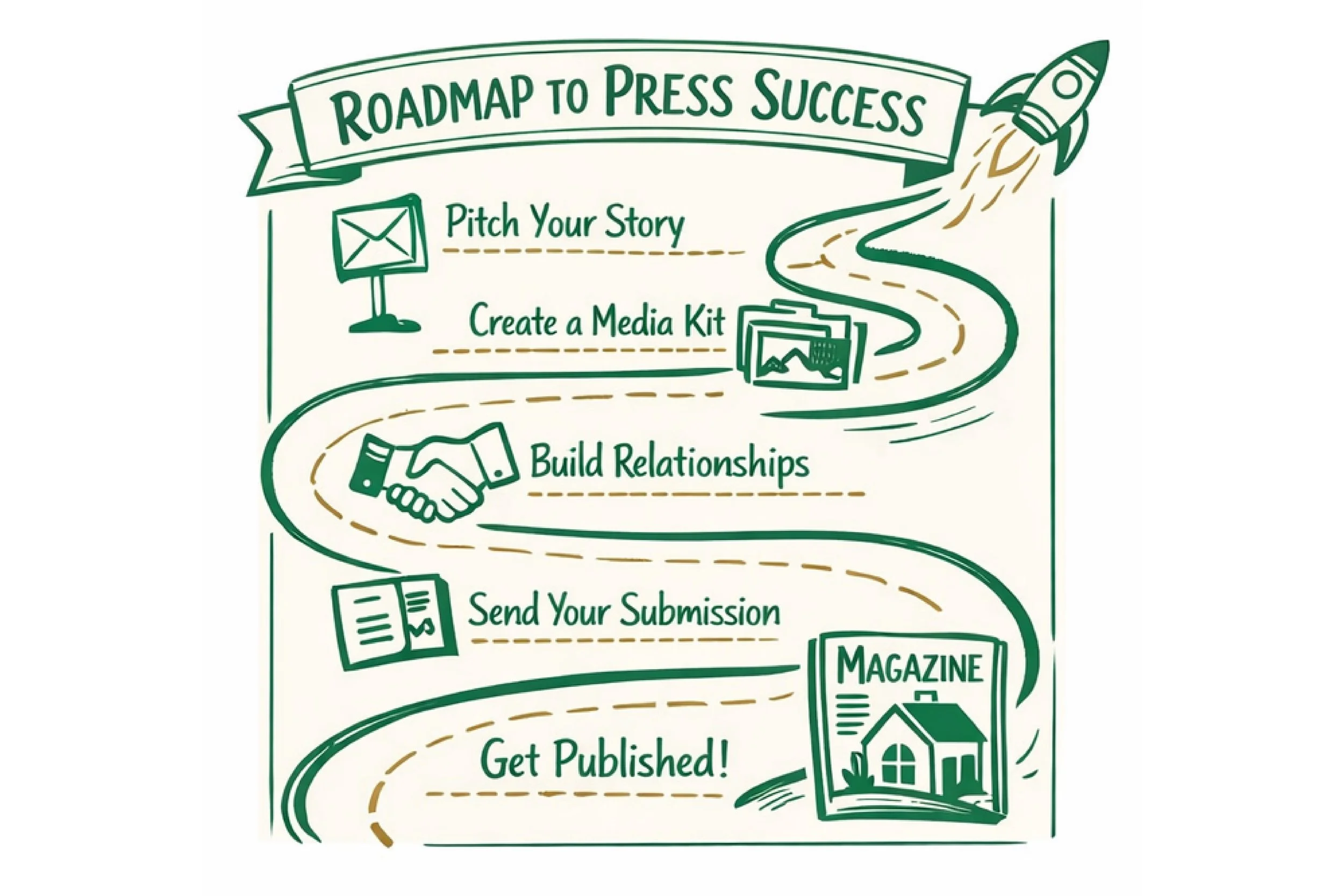
What Needs to Be in Place Before You Pitch
Getting your work published starts long before you draft a pitch email. The foundation is built during the project itself, and it requires strategic thinking about photography, styling, and homeowner involvement.
1. Professional Editorial Photography Is Non-Negotiable
While some publications will reshoot projects, the competition for editorial space is fiercer than ever. Editors receive an overwhelming number of submissions, and if they're choosing between a beautifully shot project and one they'd need to invest resources in reshooting, the decision is easy.
There are exceptions, but in most cases, professional editorial photography is your entry ticket.
2. The Styling Question
Professional styling is another investment that makes a difference, especially for top-tier publications. While some designers have a strong eye for styling their own projects, publications expect a certain level of polish that typically requires a professional stylist.
The level of styling needed varies depending on where you're pitching. Regional or digital features may be more flexible, but if you're aiming for the pages of Architectural Digest or Veranda, a professional stylist is essential.
3. Your Brand Presence Matters
When pitching your project, editors will look at your website and social media. They want to know you'll share their feature with your own audience. This doesn't mean you need tens of thousands of followers. Consistency and engagement matter more than numbers.
Your website should be current, showcase your portfolio, and present a cohesive brand. If your digital presence looks neglected or inconsistent, it can negatively affect your chance at being published, especially when going against hundreds of other firms that may have a polished digital footprint.
Why You Can't Just Pitch Your Best Project
One of the most common frustrations we hear: "I don't understand why they didn't want this project. It's such a fit for their editorial style."
Here's what many designers don't realize: editorial teams are juggling multiple considerations when selecting projects. It's not just about whether your project is beautiful or matches their aesthetic. They're asking:
What do we already have lined up for this issue?
Do we have a project that's too similar to this one?
Does this project fill a gap in our current editorial calendar?
What story can we tell beyond just the design?
There are so many variables at play when slating a project into their lineup. The editorial team might genuinely love your project but already have three modern coastal homes scheduled for the next six months.
This is why strategic PR support becomes invaluable. Understanding editorial calendars, timing pitches appropriately, and knowing how to position projects for specific publications requires industry knowledge and relationships.
The Case for Digital Coverage
Designers often fixate on print placements as the ultimate goal, sometimes dismissing digital features as less valuable. This is a mistake.
Digital coverage has significant advantages:
Faster turnaround: A digital feature might be published within a month of acceptance, versus the year-plus timeline common with print.
Permanent presence: Digital features live on publication websites indefinitely, providing ongoing SEO value and credibility.
Marketing flexibility: Once a project is published digitally, you can use it in your own marketing immediately. With print placements that have long lead times, you may wait a year or more before sharing work that's ready now.
SEO benefits: Digital features, especially in trend stories or roundups, drive traffic to your website and build authority in search rankings.
While you're pursuing print placements with their extensive timelines, digital coverage keeps your name circulating and your portfolio current.
The Reality of Exclusivity and Timing
When you pitch a project to a publication, they typically require exclusivity during their review process. This means you can't share the project with other publications, or often even on your own marketing channels, until they make a decision.
And those decisions can take months. The extended timeline is simply part of the editorial process. During this period, your project remains in holding, which means strategic planning becomes essential to maintain consistent visibility for your firm.
This is where having multiple projects at different stages (some being pitched for print, others submitted for digital features, some being used for immediate marketing) keeps your name circulating rather than leaving you in limbo.
What This Means for Your PR Strategy
Getting featured in top design publications requires more than great work. It demands:
Strategic investment in editorial photography and professional styling
Understanding of publication aesthetics and editorial calendars
Patience with extended timelines and review processes
Simultaneous pursuit of multiple coverage opportunities
Professional brand presence across digital platforms
Relationships with editors and knowledge of what they're seeking
The good news? You don't have to navigate this alone. PR professionals provide the industry knowledge, editorial relationships, and strategic planning that turn great design work into consistent media coverage.
Because at the end of the day, your time is invaluable. You should spend it designing beautiful spaces, not decoding the complexities of the media landscape.
Want to explore how strategic PR could elevate your firm's visibility? Let's talk about positioning your work for the publications that matter most to your business.