
Is Your Procurement Process Costing You More Than You Think?
You didn’t become an interior designer to chase purchase orders. But here you are: fielding vendor confirmations, managing price change notifications, tracking backorders, and somehow also trying to run a creative business.
Procurement is one of those areas that feels manageable. Until it isn’t. And by the time designers realize their process is quietly eating into their margins and their time, they’re often already deep in the chaos.
Here’s what we’ve learned from working alongside interior design firms of all sizes: most margin loss doesn’t happen all at once. It’s death by a thousand cuts. And most of it is preventable.

Where Margins Go to Die (Without You Even Noticing)
The most common procurement mistake we see? Absorbing price changes instead of passing them on.
It happens all the time. A proposal is built around a vendor quote. Months pass before the client approves the selections. In the meantime, prices shift. Freight costs fluctuate, tariffs change, vendors adjust their pricing. A designer sets a threshold (“I won’t pass on small differences”), and those small differences quietly add up to thousands of dollars across a project.
Damage claims are another significant drain, and they’re on the rise. Even when there’s no out-of-pocket cost, every hour spent coordinating with vendors and receivers is time not spent on design or new client acquisition. The financial hit may be invisible on the invoice, but it’s very real on your calendar.
And then there’s the bookkeeping connection that most designers overlook: procurement and bookkeeping are deeply intertwined. If your books aren’t current, you may not even know a price change was billed to you, which means you can’t pass it on. By the time it surfaces six months later, it’s simply too late to collect.
What Breaks First (And Why It Matters)
When a procurement process starts to unravel, there’s usually a common culprit: information flowing to too many places at once.
Imagine order confirmations landing in three different inboxes: the lead designer, the junior designer, and a personal email account. Nobody has the full picture. Items fall through the cracks. Follow-up doesn’t happen. An order marked “ready to process” sits untouched because a finish is listed as TBD. A custom piece ships with the wrong specs because the PO wasn’t reviewed closely enough.
These aren’t dramatic failures. They’re the kind of quiet operational gaps that seem small until, well, they aren’t. We’ve seen procurement errors result in significant financial losses, including situations where custom pieces were installed incorrectly due to a miscommunication on a purchase order. The kind of mistake that’s costly in every sense of the word.

The Time Cost Nobody Talks About
Here’s a number worth sitting with: each item in a procurement lifecycle, from order placement through tracking, troubleshooting, and delivery, can require meaningful hours of administrative attention, depending on complexity. A straightforward retail order is one thing. A custom upholstered piece with specific installation specs is another entirely.
Multiply that across a full project, and the hours add up fast. And when ownership of those tasks shifts between people mid-project. A design team member hands off to an office manager who hands off to a principal who hands back to the vendor, and each transition creates new opportunities for things to get missed.
Consistency, in procurement, is a form of protection.

Trade Pricing, Markup Strategy, and Where It Gets Complicated
One area where procurement intersects closely with financial strategy is markup. Most designers have a standard approach, but the right approach depends on your specific business model, vendor relationships, and client expectations.
What’s worth understanding: trade discounts aren’t fixed. The volume of your business and the depth of your vendor relationships can meaningfully affect the pricing you’re offered. How you handle that discount, and whether it benefits your firm or your client, is a business decision that benefits from intentional strategy, not just habit.
Some designers are moving toward retail-based pricing structures, which can simplify client-facing price changes (since vendor increases rarely exceed retail). Others prefer the clarity of a consistent markup. Each has trade-offs in administrative effort, margin management, and how you handle vendor price volatility. This is exactly the kind of nuanced decision where working with a financial partner who understands the design industry can help you land on an approach that actually serves your business.
When It’s Time to Stop Going It Alone
For many designers, the turning point isn’t a single catastrophic moment. It’s quieter than that: a calendar that’s completely full, projects waiting to be taken on, and the recognition that procurement is consuming time that could be generating revenue.
Outsourcing procurement doesn’t mean relinquishing control. It means placing the operational work in hands that are built for it, so you can focus on the client relationships and creative decisions that only you can make. Some designers hand off the full process from mood board to delivery. Others keep the custom and installation-heavy elements in-house and delegate the rest. There’s no one right model.
What matters is having a process that’s consistent, documented, and designed to protect your margins, not just your schedule.
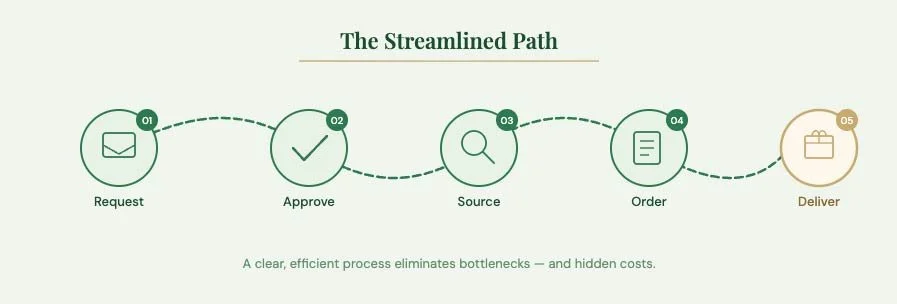
Ready to Get Your Procurement Process Working for You?
At The Dove Agency, procurement isn’t an afterthought. It’s a core part of how we help interior design firms protect their margins and scale their operations. Our procurement team works alongside our financial services team, which means the handoff between order management and bookkeeping is intentional, not accidental.
If you’re curious about what a more streamlined process could look like for your firm, we’d love to talk.